Thrombosis
Awareness
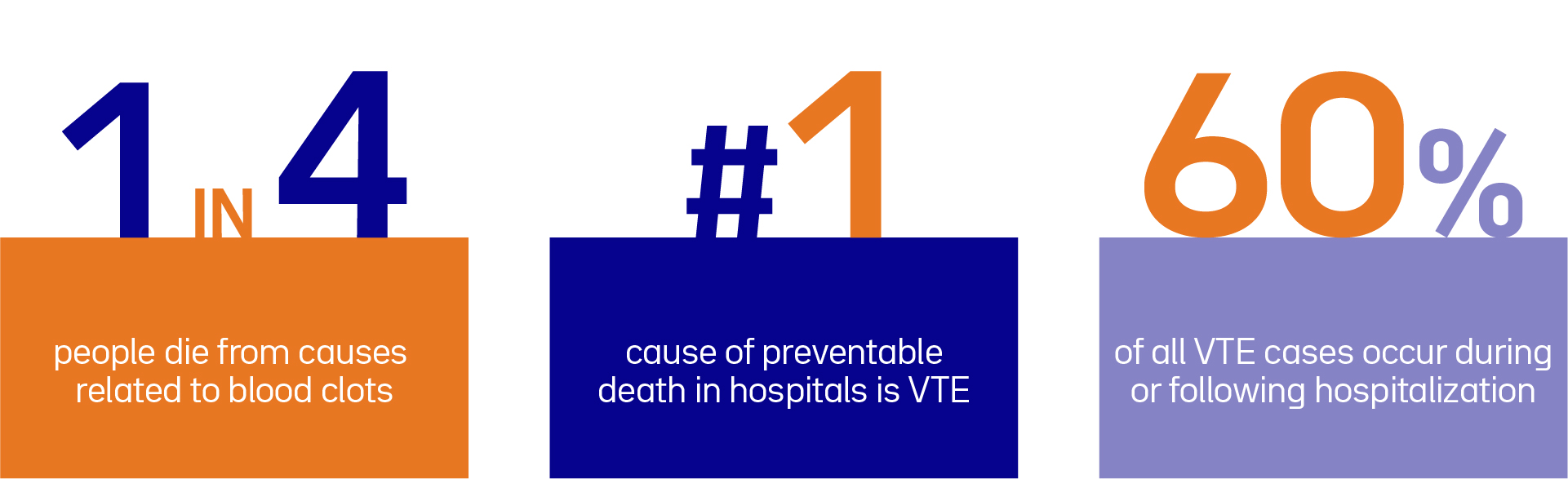
Werfen is committed to Powering Patient Care and increase global awareness of thrombosis to enhance patient outcomes.
In this episode, we explore upper extremity deep vein thrombosis (UEDVT), a less common type of thrombosis characterized by blood clots forming in the deep veins of the arms, shoulders, or neck.
Werfen is dedicated to Powering Patient Care and increasing global awareness of thrombosis to improve patient outcomes.
In this episode, we explore upper extremity deep vein thrombosis (UEDVT), a less common type of thrombosis characterized by blood clots forming in the deep veins of the arms, shoulders, or neck. Despite being less prevalent than lower extremity DVT, UEDVT presents notable health risks and warrants significant attention.
UEDVT can arise from various factors. A common cause is the use of medical devices such as central venous catheters, pacemakers, or defibrillators, which can irritate or damage vein walls. Cancer and its treatments, particularly chemotherapy, can also elevate the risk. Additionally, repetitive arm movements, often seen in athletes, can result in Paget-Schroetter syndrome, a relatively rare type of UEDVT also known as “effort thrombosis”.
Nowadays, UEDVT accounts for 5% to 10% of all DVT cases, with incidence rates increasing annually. Most patients with UEDVT have a central line, with an incidence rate between 14% and 23%. Pulmonary embolism (PE) occurs in up to 6% of the cases.
The symptoms of UEDVT can be subtle and often resemble those of other conditions. Recognition and appropriate intervention may prevent significant patient morbidity and mortality.
Doctors may look for signs of swelling, tenderness, and changes in skin color. Additionally, current diagnostic guidelines suggest a strategy starting with a D-dimer test to exclude UEDVT, followed by compression ultrasound if the D-dimer test is positive.
One of the most serious complications of UEDVT is PE, a medical emergency requiring immediate attention.
The treatment of UEDVTs depends on the clinical presentation. Most patients present with limb swelling in the setting of central venous catheterization. The American College of Chest Physicians recommends that the clinicians first determine the necessity of the central line. If required, the line should remain in place, and the patient should begin anticoagulation therapy. If the line is not needed, it should be removed after 3 to 5 days of anticoagulation therapy. In the hospital, patients can be transitioned to warfarin with unfractionated heparin and should continue warfarin for 3 to 6 months after diagnosis. The role of direct oral anticoagulants is currently under investigation. In cases of Paget-Schroetter syndrome, the treatment approach may differ due to the acute nature of the thrombosis, and often necessitates surgical intervention.
Effectively managing UEDVT increasingly relies on interprofessional teams, including radiologists, oncologists, nephrologists, haematologists, internists, and vascular surgeons. This collaborative approach is essential for providing comprehensive care and improving the management of UEDVT, ultimately leading to optimal patient care.
UEDVT is a serious medical condition that, despite being less common than lower extremity DVT, demands immediate diagnosis and treatment to avert severe complications. By raising awareness about its risk factors, symptoms, and management strategies, we can significantly elevate the quality of care and ensure superior patient outcomes in the long run.