Thrombosis
Awareness
Werfen is committed to Powering Patient Care and increase global awareness of thrombosis to enhance patient outcomes.

Werfen is committed to Powering Patient Care and raising global awareness of thrombosis to enhance patient outcomes.
Knowing thrombosis risk factors, prevention strategies, and treatment options is crucial for Healthcare Professionals (HCPs) to effectively manage and prevent VTE.
Werfen is committed to Powering Patient Care and raising global awareness of thrombosis to enhance patient outcomes.
Knowing thrombosis risk factors, prevention strategies, and treatment options is crucial for Healthcare Professionals (HCPs) to effectively manage and prevent VTE.
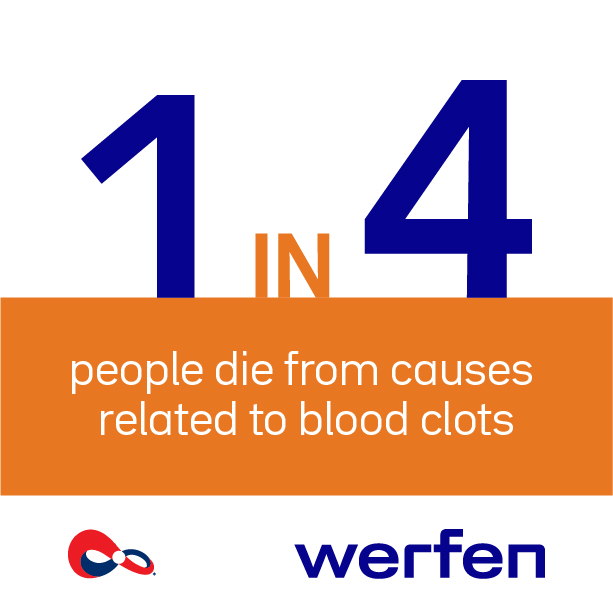
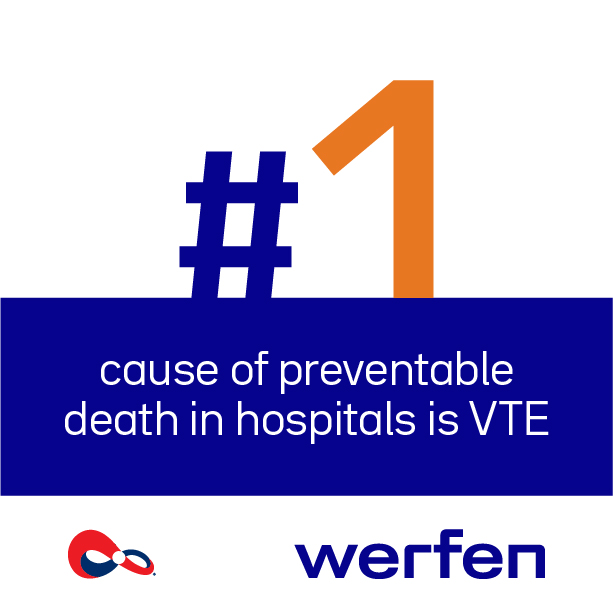
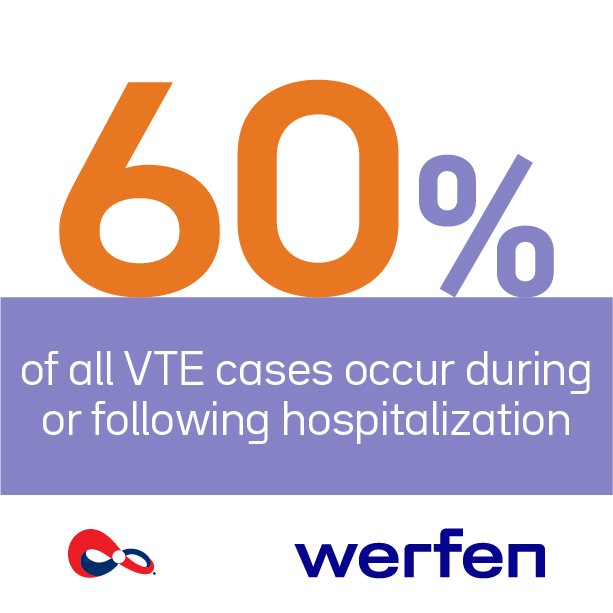
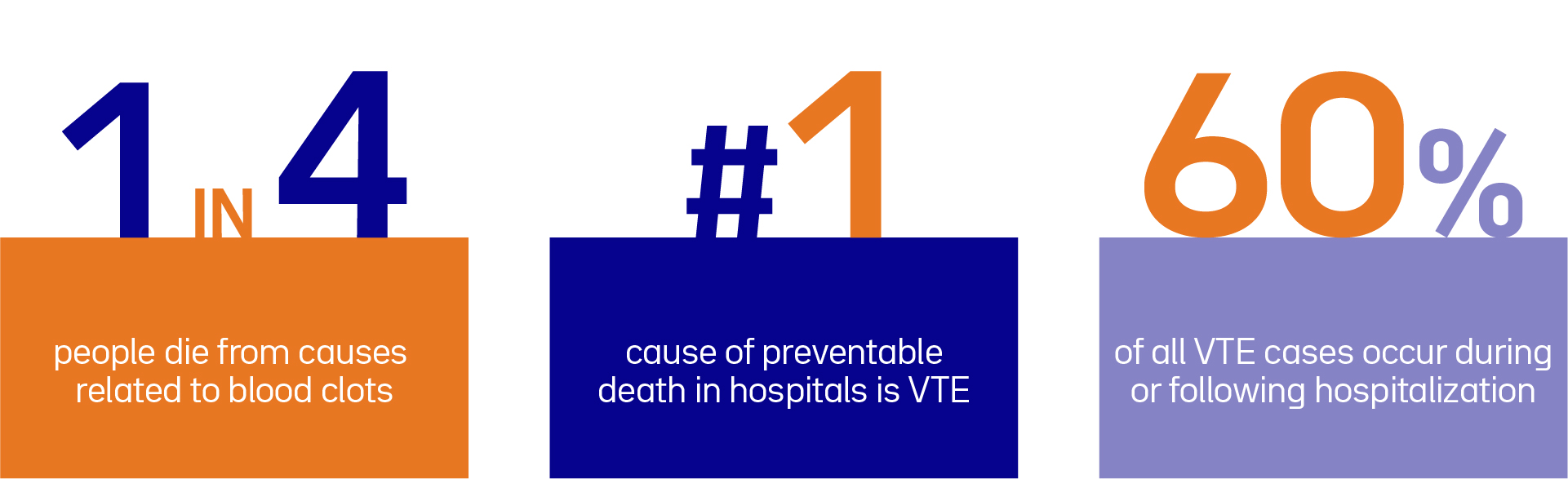
VTE is a leading cause of death and disability worldwide, affecting individuals of all ages, genders, and ethnicities. Often asymptomatic, misdiagnosed, and unrecognized at death, VTE poses a significant challenge for HCPs due to its insidiousness.
Key VTE risk factors include immobility, surgery, specific medical conditions, lifestyle choices, and family history. Recognizing at-risk patients is the first step in preventing thrombosis. HCPs should educate each patient on preventing clot formation and prescribe mechanical prophylaxis and anticoagulants for High-risk individuals.
Wells Score is the most widely used Pre-Test Probability assessment for both DVT and PE suspected patients. This tool helps in selecting the best diagnostic method for ruling in or out VTE and improves the interpretation and accuracy of subsequent testing.
Safe and effective medical care is guided by evidence-based recommendations from Professional, National, and International Organizations.
Key societies periodically releasing VTE guidelines include the International Society on Thrombosis and Haemostasis (ISTH), the American Society of Hematology (ASH), the European Society of Cardiology (ESC), and the American College of Chest Physicians (ACCP).
Regular follow-up appointments are essential to monitor thrombosis recurrence and manage long-term anticoagulation therapy. Patients should be encouraged to maintain a healthy lifestyle and supported in coping with the psychological impact of their condition. Clear and empathetic communication with patients and their families is crucial to ensure they understand all implications and consequences of their actions.
HCPs should stay updated with the latest guidelines and research on thrombosis management by participating in continuing educational programs and workshops often organized by National and International Organizations.
These associations and networks also offer valuable collaboration opportunities and foster peer engagement.
• Effective thrombosis management begins with a timely risk assessment for accurate diagnosis.
• D-dimer testing, combined with Pre-Test Probability, is safe and efficient for excluding VTE in symptomatic outpatients.
• Adhering to guidelines from leading Societies ensures safe and effective care with prompt initiation of anticoagulation therapy.
• Post-thrombosis care involves regular follow-ups, lifestyle support, and clear, empathetic communication with patients and their families.
• Continuous education and collaboration through programs and workshops are vital for HCPs.
• Implementing these tips and tricks can significantly reduce the incidence and complications of VTE, ensuring better patient outcomes and quality of care.